
What We See on This Call Around Waldo
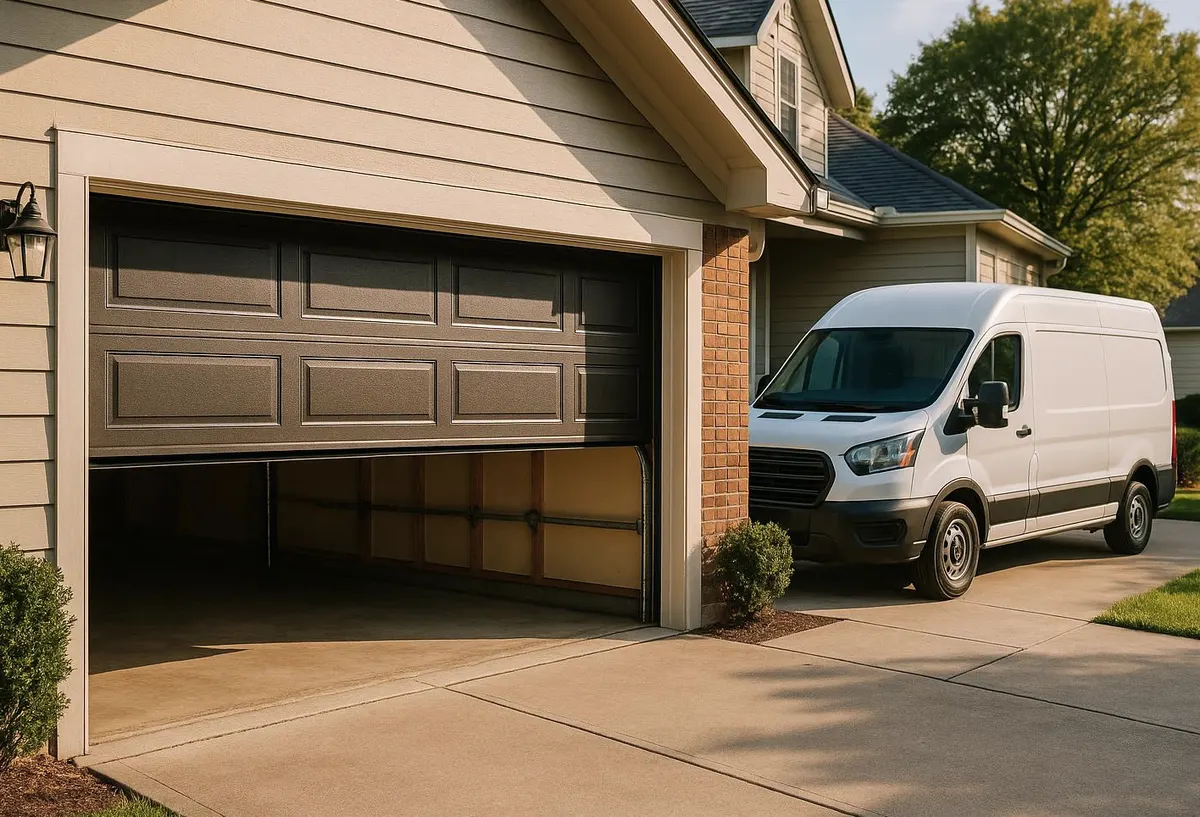
The homeowner walks out, hits the remote, and the door rolls down a foot or two before stopping and going back up on its own. Or worse: nothing happens at all when the button is pressed, and the door just sits there. In Alachua County, this call spikes after a stretch of hot, humid days or right after a storm rolls through in the afternoon. Moisture, heat swelling, and wind-driven debris all play a role, and the fix depends on catching the right cause early instead of guessing.
Here's the order a technician actually works through on a service call like this, from quickest fix to most involved.
Step 1: Check the Safety Sensors First
Every modern opener has two small sensor eyes mounted a few inches off the ground on either side of the track. If they're misaligned, dirty, or blocked, the door will reverse immediately after it starts closing — this is the single most common cause of this exact symptom.
- Dust and cobwebs on the sensor lenses, which build up fast in a humid garage, can scatter the beam enough to trigger a false reversal.
- Condensation on the lenses after a muggy night or sudden downpour can do the same thing.
- Low afternoon sun shining directly into one sensor can wash out the beam during certain times of year.
- A box, bike, or debris sitting in the beam path, even briefly, will stop the door cold.
The fix here is simple: wipe both lenses with a soft cloth, make sure both brackets are tight and pointed at each other (a bump from a parked bike or lawn equipment can knock them out of alignment), and clear anything sitting near the base of the track.
Step 2: Inspect Sensor Wiring and Connections
If the lenses are clean and aligned but the light on one sensor is blinking instead of solid, the problem is likely in the wiring. Humidity and the occasional rodent in an attached garage can corrode or chew through the low-voltage wire running along the track. A technician will trace the wire back to the opener unit, check for loose terminals, and replace any section that's corroded or frayed.
Step 3: Check the Opener's Force and Limit Settings
If the sensors check out fine, the next thing to look at is the opener's travel limits and close-force setting. These control how far the door travels and how much resistance the opener will tolerate before it assumes it's hit an obstruction and reverses. Seasonal temperature and humidity swings cause wood and metal to expand and contract slightly, which changes how much resistance the door naturally puts up as it closes. A door that closed fine in spring can start reversing in late summer simply because the force setting is now too sensitive for the door's current weight and friction. Adjusting these settings takes a few minutes with the opener's control panel, but it's easy to get wrong without testing the door's balance afterward.
Step 4: Look for Obstructions and Track Debris
Afternoon downpours wash leaves, pine needles, and grit into the bottom track and rollers. A buildup of debris in the track can create just enough resistance to trip the opener's safety reversal, even if nothing is visibly blocking the door. Clearing the track and bottom seal, then testing a full open-close cycle, often resolves intermittent reversals that don't seem to have an obvious cause.
Step 5: Check Track Alignment and Rollers
If the door is consistently sticking or reversing at the same spot every time, the track itself may be bent or pinched — from a storm impact, a vehicle bump, or just age. Worn or cracked rollers can also cause the door to bind at a certain point, which the opener reads as an obstruction. A technician will run the door manually (with the opener disconnected) to feel for rough spots, then straighten or replace the affected section of track and swap out worn rollers.
Step 6: Test Cables and Springs
If the door won't close at all, or reverses violently right at the start, worn cables or a weakening spring are often the culprit. A spring under reduced tension changes how the door moves, and the opener's force sensor reacts by stopping or reversing it as a safety measure. A frayed cable can also cause the door to hang unevenly, binding in the track. These components are under heavy tension and aren't a DIY repair — this is where a technician moves from troubleshooting to a hands-on fix.
Step 7: Rule Out the Opener Itself
If every mechanical component checks out and the problem persists, the opener's logic board or motor may be failing, especially on older units that have spent years in a hot, humid garage. At this point, replacement is usually more cost-effective than continued repairs.
When to Call Waldo Overhead Door Co
If you've wiped the sensors and cleared the track and the door is still reversing or won't close, it's time to get a technician out before the issue gets worse or the door gets stuck halfway. We handle this exact problem regularly for homes around Waldo, Gainesville, and Hawthorne, and most calls involve either our Garage Door Spring Repair or Garage Door Cable & Roller Repair service, along with a check of the opener's sensor alignment and force settings while we're there.
If your garage door in Waldo, FL is reversing before it closes or won't close at all, call Waldo Overhead Door Co and we'll get it diagnosed and fixed right the first time.